





What Is Greaseproof Paper Used For? Every Application Explained
From food packaging and wrapping food to bakery presentation and branded takeaway packaging, greaseproof paper has several different applications across the food industry.
Understanding what greaseproof paper is used for will allow you to choose the right product for baking, cooking, and hospitality. It can also help you avoid common mistakes when using baking paper, parchment paper, and wax paper.
What Greaseproof Paper Actually Is (and What Makes It Grease-Resistant)
If you’ve ever wondered what is greaseproof paper used for, you may find it useful to understand how it’s made first.
Many people aren’t aware of this, but Greaseproof paper is produced from heavily refined wood pulp. It consists of tightly packed fibres that naturally resist grease and moisture.
Unlike baking paper or parchment paper, it does not have a thin silicone coating. However, given that it is typically 28–50 GSM, it is suitable for direct food contact. It is also heat-resistant to around 180–200°C.
Food Wrapping and Packaging (the Core Use Case)
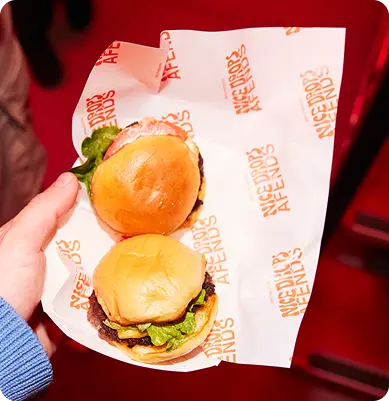
The most common use for greaseproof paper is wrapping food. It’s useful because it prevents food oils from soaking through. As a result, it protects sandwiches, burgers, wraps, burritos, baguettes, chips, pastries and other baked goods from being compromised.
Greaseproof paper can also be used to line serving trays, baskets, and deli counters. Additionally, it can help to separate food items in catering trays and create chip cones.
At Star Stuff Group, we offer custom-printed greaseproof paper that helps Australian cafes, bakeries and takeaway stores turn every order into a branding opportunity. This can be particularly beneficial for delivery, where the packaging is often the customer’s only brand interaction.
Lining Baking Trays and Tins
While greaseproof paper can be used to line trays, baking trays and cake tins, it isn’t naturally non-stick. This is because it has no silicone layer. Therefore, if you use it, you will need to grease both sides with butter or oil to stop the food from sticking.
Greaseproof paper suits pastry, tart shells and blind baking. However, for baking recipes that require high temperatures, non-stick baking paper or baking parchment is usually the better choice. Just make sure you let the cake or pastry cool before removing the paper.
Food Service Presentation and Table Use
Beyond cooking paper, greaseproof paper creates an attractive presentation for hospitality businesses. To start with, it lines serving baskets, wooden boards and catering platters. It can also be used to wrap cutlery and form cones for hot food.
Star Stuff supplies custom sizes, including full sheets (660 × 400 mm), half-cut and quarter-cut formats to our customers. This allows venues to match the paper to their serving style while reinforcing their branding.
Custom-Branded Greaseproof Paper for Marketing
Custom-printed greaseproof paper offers businesses an excellent opportunity to use food packaging as an affordable advertising medium. Logos, for instance, can be printed in one colour, two colours, or full colour across white or kraft stock to give cafes, bakeries, delis, and food trucks a more professional appearance.
Star Stuff Group offers practical minimum order quantities to our customers. We also provide them with competitive lead times and sample approval before production. This helps them to identify the right greaseproof paper for their needs before placing a larger order.
Non-Food Uses of Greaseproof Paper
Greaseproof paper is commonly associated with food. However, it has several different applications outside the kitchen that you might not be aware of.
For example, it protects surface areas during painting and craft projects. It also wraps candles, soaps and bath bombs for retail, and cushions fragile items like wine bottles during transport. Some companies even use it to separate layers of baked goods in gift boxes to prevent sticking.
Additionally, its slightly translucent finish also makes it a practical substitute for tracing paper in art and design work.
What Greaseproof Paper Is NOT Suitable For
While greaseproof paper is quite versatile, there are some instances where it should not be used. One such is in an oven at high temperatures. At least not without greasing both sides because the food will stick otherwise.
It should also never be placed under a grill or over an open flame. You are also recommended not to use it as a direct replacement for parchment paper or non-stick baking paper in recipes that require non-stick properties.
Pay particular attention, too, if you intend to use it in a microwave. Always check the product specification, especially for printed or coated varieties. Lastly, don’t confuse it with wax paper, as the wax coating can melt or smoke when exposed to heat.
How Greaseproof Paper Compares to Baking Paper and Wax Paper
Although greaseproof, baking and wax paper all look similar, they are actually made for different uses. Therefore, understanding the difference between them can help you choose the most suitable option for your baking and cooking needs.
- Greaseproof paper: Has no coating and resists grease through its dense fibre structure. It is heat-resistant to around 180–200°C. Hence, it is best for wrapping food, lining trays with added oil, and food service presentation.
- Baking paper (parchment paper): Features a silicone coating that creates a non-stick surface. It withstands temperatures of around 220–230°C, which makes it ideal for roasting, baking and recipes where you want to prevent sticking.
- Wax paper: As this is coated with wax, it is only suitable for cold food storage and wrapping. Do not put it in an oven because the wax can melt or smoke when exposed to heat.
Choosing the Right Greaseproof Paper for Your Business
The right greaseproof paper for your needs will depend on how it will be used in your business.
For most food packaging, 28–40 GSM is suitable for wrapping. That said, heavier grades are better for liner applications. Standard sheets measure 400 × 320 mm, and custom sizes are available to suit different formats.
Overall, white and kraft brown are the most common base stocks. However, if sustainability is important to you, then choose FSC-certified or unbleached options. Just be mindful that recyclability and compostability claims may require product-specific verification under Australian standards.
Frequently Asked Questions
Is greaseproof paper the same as baking paper?
No, it is not. Baking paper has a thin coating of silicone, which offers better heat resistance. Greaseproof paper has no coating. The latter is often called butter paper or bakery paper.
Can greaseproof paper go in the microwave?
Usually, plain food-quality greaseproof paper is suitable for short microwave use when wrapping or steaming sandwiches. However, you should always check the manufacturer’s instructions.
Is greaseproof paper recyclable?
Depending on the brand, plain greaseproof paper is often recyclable, biodegradable and eco-friendly.
What GSM is greaseproof paper?
Most food wrapping uses 28–50 GSM greaseproof paper. That said, some heavier grades are commonly chosen for lining baking sheets, trays and other commercial applications.
Can greaseproof paper be used for freezing food?
Greaseproof paper can be used to separate frozen foods, rolling dough, or wrapping short-term freezer items.